
Loading...
Serving Lake Havasu City, AZ and surrounding areas. (928) 392-1067
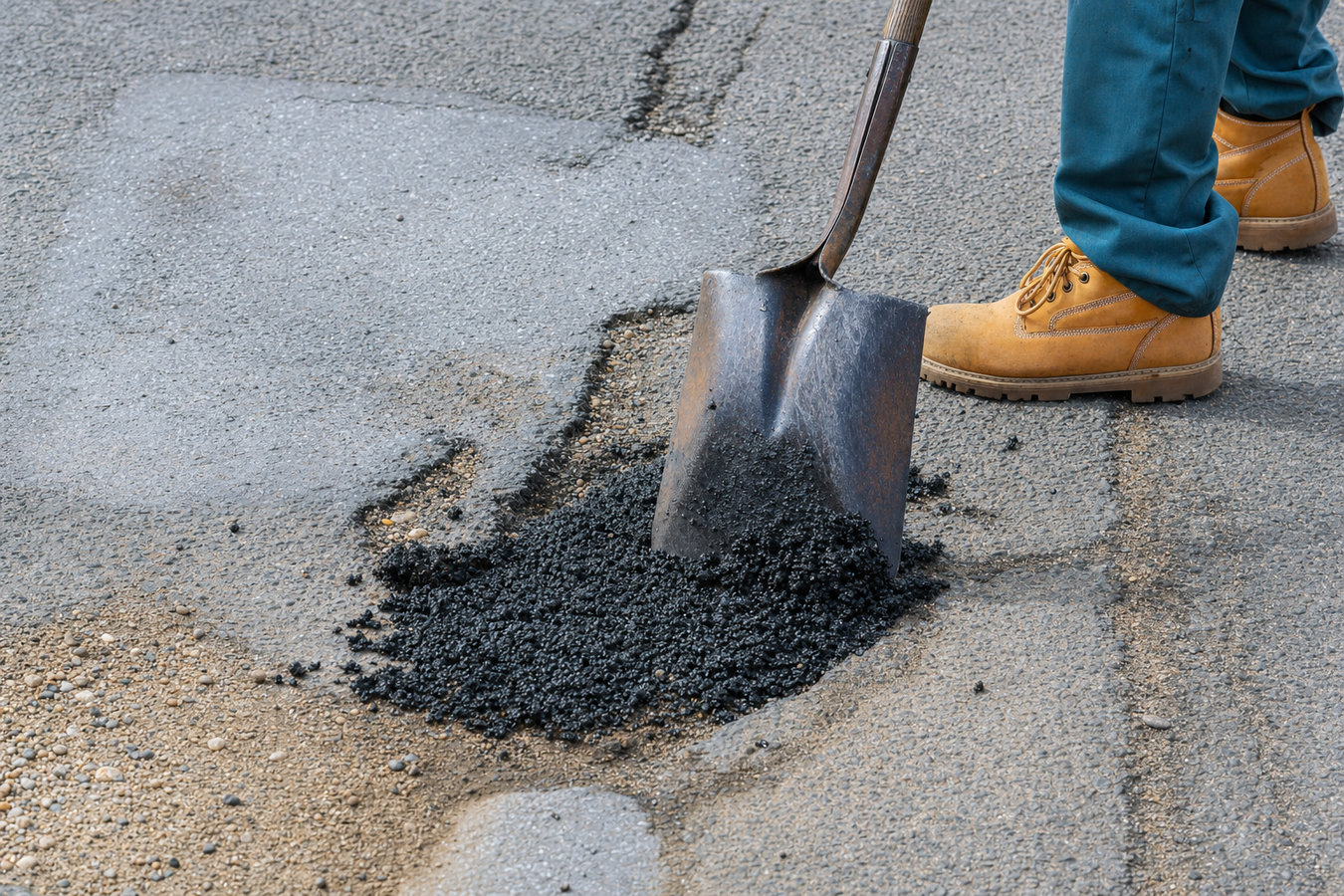
One monsoon season can turn a small crack into a base failure. We repair potholes with hot-mix asphalt and proper compaction so the fix actually holds.
Pothole repair in Lake Havasu City involves cutting clean edges around the damaged area, removing loose material, filling with hot-mix asphalt in layers, and compacting until the patch sits level - most single-hole jobs are complete within a couple of hours, and the surface is ready for traffic the same day.
The real cost of waiting is not the repair itself - it is what the hole becomes after the next monsoon. Water gets under the pavement, erodes the base, and what started as a single hole turns into a section where the whole base has failed. At that point, you are looking at a full-depth repair instead of a simple patch. We handle pothole repair alongside broader asphalt repair work for properties with more extensive surface damage.
In Lake Havasu City, the combination of extreme summer heat and sudden monsoon storms accelerates every stage of asphalt failure. The intense UV breaks down the binding oils in the surface, making it brittle. Then the monsoon hits and water forces its way into every crack. Getting the repair done right - with proper base prep, the right mix, and full compaction - is what separates a patch that holds for a decade from one that fails in a season.
A clear hole, bowl, or sunken area in your driveway or parking surface is the most obvious sign a repair is needed. In Lake Havasu City, these often appear or grow noticeably after monsoon season, when heavy rain has worked its way under the surface and weakened the base.
A distinct jolt when pulling into your driveway or crossing a section of your parking area means the pavement underneath has likely failed. This is easy to notice in everyday use and is a clear signal to call a contractor before the damage spreads to surrounding asphalt.
When water consistently collects in one area after a monsoon storm, the surface has dipped or drainage is compromised. That standing water will keep working its way into the pavement and make the problem worse with each storm - faster in this climate than most.
Heavily oxidized asphalt that looks faded, gray, and chalky is fragile and breaks apart easily. In Lake Havasu City's intense sun, this oxidation happens faster than in most places. When you see this condition around an existing crack, a pothole is likely forming beneath the surface.
We handle everything from a single residential driveway hole to multi-hole repairs across a commercial parking lot. For straightforward jobs where the base is solid, we cut clean edges, fill with hot-mix asphalt, and compact until the patch is flush. For areas where the base has failed or water has eroded the sub-base, we do a full-depth repair - removing material down to stable ground, rebuilding the base in compacted layers, and then surfacing. For properties that also have surface cracking around the damaged area, we pair the repair with our grading and excavation service when the underlying grade needs correction, and we often recommend adding a sealcoat to protect the surrounding pavement from the UV and water exposure that causes potholes to form in the first place. Our asphalt repair service covers larger sections of surface failure where the damage has moved beyond isolated holes.
After the repair is done, we discuss whether a sealcoat makes sense for your specific surface. In Lake Havasu City, the answer is almost always yes - the sun is relentless, and a sealcoat over a fresh patch protects both the new material and the surrounding asphalt from the oxidation that makes pavement brittle and prone to new cracks. We can apply it as part of the same visit once the patch has cured.
Suits driveways or parking areas with one or two isolated holes where the base underneath is still sound.
Suits surfaces with several scattered holes that can be addressed in a single crew visit rather than multiple trips.
Suits areas where the base has failed - the crew removes material down to stable ground, rebuilds the base, and resurfaces.
Suits property owners who want the patch protected and the surrounding pavement sealed against UV and water intrusion in the same visit.
Lake Havasu City sees summer temperatures that regularly exceed 115 F, and pavement surface temperatures can climb well above that. In that kind of heat, asphalt softens. A patch that was not fully compacted or that used the wrong mix will deform under traffic during the hottest months. At the same time, the North American Monsoon brings sudden, heavy downpours from July through September - and those storms push water into any crack or weak spot very quickly. The combination of heat-stressed pavement and fast-moving water is the primary driver of pothole formation here, not the freeze-thaw cycles you see in colder climates. Homeowners in Lake Havasu City and surrounding communities like Topock deal with this cycle every year, which is why using a contractor who knows desert-climate asphalt mixes matters.
Much of the ground in this area also contains caliche - a hard calcium carbonate layer common in the Mojave Desert. If a pothole has formed because the base material has moved or washed out above a caliche layer, a surface patch alone will not hold. The repair needs to address what is underneath. That is a condition we check for on every job before recommending a repair method. The intense, year-round sun also accelerates oxidation of the asphalt binder, making pavement brittle and gray - and more susceptible to pothole formation. Pairing a repair with a sealcoat slows that process and protects the full surface, not just the patched area. For further reading on desert pavement behavior, the Asphalt Institute publishes technical guidance on mix design for high-temperature climates.
Call or send a message describing the size and location of the damage. We reply within 1 business day and schedule a site visit - most assessments happen quickly because accurately quoting a pothole requires seeing whether the base beneath it is compromised.
We look at the damaged area in person, check whether the base is solid or has failed, and give you a written estimate that specifies the repair method, materials, and total cost. If base repair is needed, that is stated clearly in the quote.
We plan work around the heat. During the hottest months, we schedule early morning starts to ensure the hot-mix asphalt compacts correctly. We also coordinate around forecast rain so the patch has time to set before any storm arrives.
The crew cuts clean edges around the damaged area, removes all loose material, fills with hot-mix asphalt in layers, and compacts each layer until the patch sits level and solid. A typical single-hole repair is complete within a couple of hours, and the surface is ready for traffic shortly after.
We assess the base, use hot-mix asphalt, and compact it correctly - no cold-pour shortcuts. Most jobs are done in a single morning.
(928) 392-1067Lake Havasu City heat above 110 F can cause poorly timed asphalt work to compact incorrectly or set too fast. We schedule jobs for early morning during the hottest months and time the pour to match conditions, not the clock. Your patch holds because it was placed right.
Cold-pour filler is a short-term stopgap. For a permanent repair in a desert climate, we use hot-mix asphalt compacted in layers with a plate compactor or roller. The finished patch sits level, bonds tightly to the surrounding pavement, and holds up through monsoon cycles.
Arizona requires paving contractors to hold a state-issued license before performing this work. You can verify any contractor's status through the Arizona Registrar of Contractors at azroc.gov. We encourage you to check before signing anything - it takes under a minute.
Repeated potholes in the same spot almost always mean a compromised base, not just a worn surface. We assess the base before recommending a repair method, so you are not paying for a surface patch that will fail again. The National Asphalt Pavement Association sets the industry standards our work follows.
Pothole repair done right is straightforward, but getting the details wrong - skipping base assessment, using cold-pour filler, or paving in the worst heat of the day - is how a cheap repair becomes an expensive problem. We bring the right materials, the right timing, and honest advice on whether a surface patch is enough or whether the base needs work first.
When the base under your pavement has shifted or washed out, grading and excavation corrects the underlying grade before any new surface goes down.
Learn MoreBroader surface damage - crumbling edges, large failed sections, or widespread cracking - handled with the same permanent repair methods we use for potholes.
Learn MoreCall now or request a free estimate - most repairs are done in a single morning and the surface is ready to use the same day.