Loading...
Serving Lake Havasu City, AZ and surrounding areas. (928) 392-1067
Small cracks in your driveway become expensive problems fast in the desert heat. Seal them now with the right materials before water and UV do the rest.
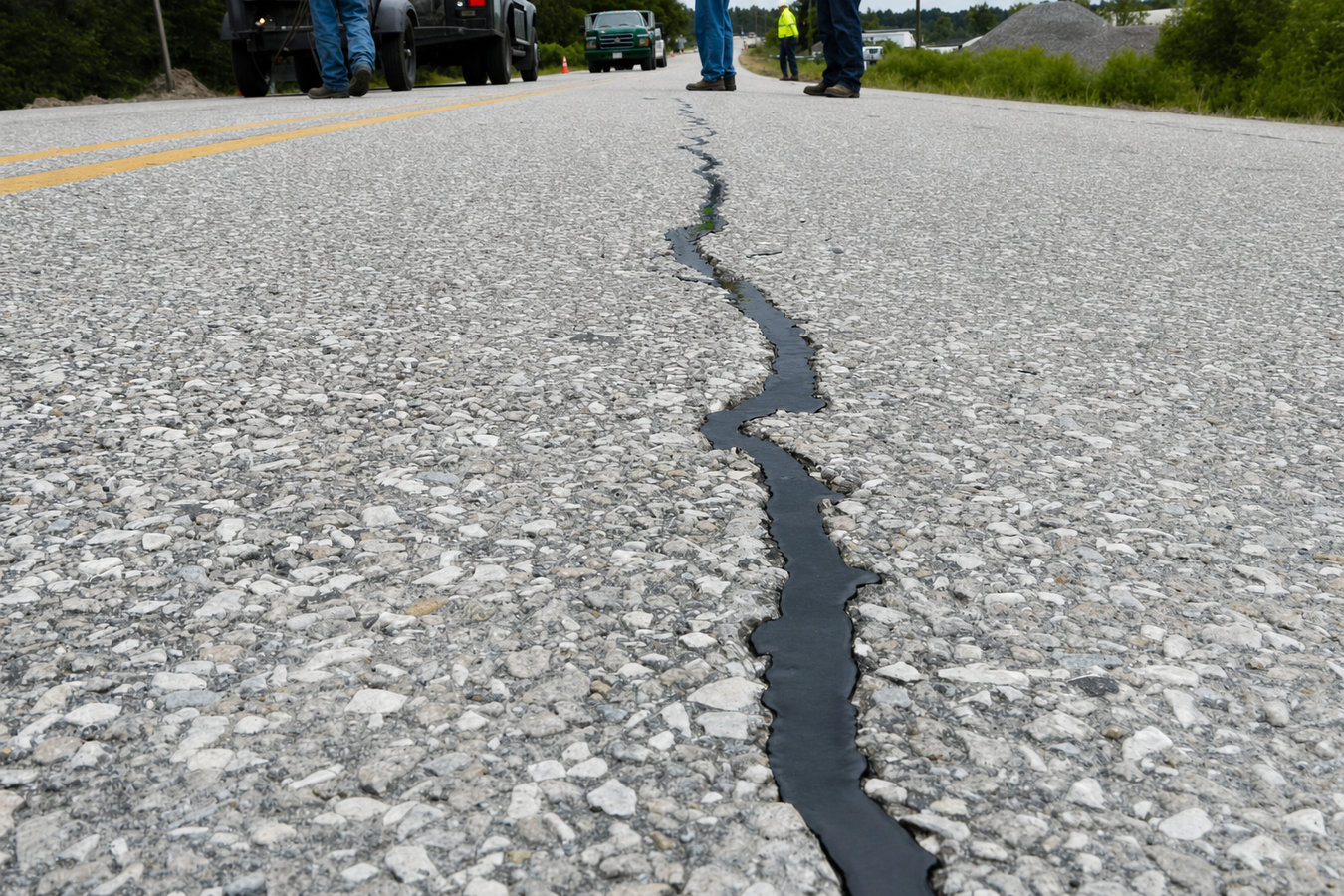
Asphalt crack sealing in Lake Havasu City involves cleaning out existing cracks and filling them with a flexible, rubberized sealant that bonds to both sides of the crack - most residential driveways are completed in a few hours with the surface ready for foot traffic the same day.
In this climate, cracks are not just a cosmetic issue. Lake Havasu City sees some of the most intense UV exposure in the country, and asphalt surfaces absorb and hold heat well beyond the already extreme air temperatures. That combination dries out the binder that holds your pavement together, creating cracks - and then the same heat cycles that created them keep widening them. Add monsoon rains that can drop a significant amount of water quickly onto an already cracked surface, and you have water getting underneath and weakening the base.
Crack sealing is one part of a complete pavement maintenance plan. If your surface has also turned gray and lost its protective sheen, pairing crack sealing with asphalt sealcoating gives you the most protection against the desert sun. For driveways or lots where the damage has already reached the structural layer, our commercial asphalt paving team handles full resurfacing and replacement.
If you can spot lines in your asphalt - straight across, along the edges, or branching outward - those are open paths for water and debris to get underneath. In Lake Havasu City's heat, these cracks widen faster than you might expect. The sooner they are sealed, the less damage accumulates.
Fresh asphalt is dark and slightly flexible. When it turns gray and feels brittle underfoot, the surface has been oxidized by the sun - a very common condition in the Sonoran Desert. That oxidized surface is more prone to cracking, and any existing cracks will widen more quickly. Sealing now, before further deterioration, is the right move.
Lake Havasu City gets intense but infrequent rain events, and when water sits in open cracks, it works its way into the base layer. Once the base gets wet and soft, the surface above it can sink or crumble. Water collecting in cracked areas after a storm is a clear sign the cracks need sealing before the next rain.
Edge cracking and crumbling is one of the earliest signs an asphalt surface is losing structural integrity. It often starts at the sides where the pavement is thinnest and most exposed to heat and UV. Catching it at the crumbling-edge stage and sealing those cracks is much less expensive than waiting until the edge breaks away entirely.
We treat all common crack types found on residential driveways and commercial parking areas: longitudinal cracks that run with the pavement direction, transverse cracks that cut across it, edge cracks along the borders, and branching cracks before they develop into a full alligator pattern. Every job starts with thorough cleaning of each crack - a heat lance removes moisture and loosens debris, and a blower clears it out. We do not skip this step. The National Asphalt Pavement Association is clear that proper surface preparation is what determines whether sealant holds - and we treat that as a minimum standard, not a bonus step.
For properties where crack sealing is the right first step, we can follow up with a full surface asphalt sealcoating application to protect the entire surface from further UV oxidation. When cracks have already spread beyond sealing - into a dense, interconnected network or structural failure - our commercial asphalt paving team handles full-depth repairs and resurfacing. We will tell you honestly which situation you are in after walking the surface with you.
For homeowners with isolated or edge cracks on an otherwise sound driveway - the most cost-effective way to extend pavement life before damage deepens.
For business owners or property managers with cracks across a larger surface - phased sealing keeps sections accessible while work progresses.
For properties receiving a full sealcoat - addressing any open cracks before applying the sealcoat produces a better bond and a longer-lasting result.
For properties on a planned maintenance schedule - annual or biannual crack checks and sealing before the hot season is the lowest-cost way to manage pavement long term.
Lake Havasu City experiences some of the most demanding conditions for asphalt in the United States. Summer temperatures regularly push well above 110 degrees F, and asphalt surfaces absorb and hold that heat far beyond the air temperature. The binder that holds the pavement together softens under sustained extreme heat and then contracts again when temperatures drop at night. That daily expansion and contraction cycle works cracks open gradually over months and years. UV radiation from over 300 sunny days per year accelerates surface oxidation, turning asphalt brittle and gray - and brittle pavement cracks faster. Crack sealing pauses that cycle by closing the opening before it widens.
The timing of maintenance matters here in a way it does not in cooler climates. Scheduling crack sealing in fall or winter - before the next brutal summer - gives the sealant time to fully cure and bond before it faces extreme heat. Properties in Topock and Needles face the same heat-driven pavement challenges we see throughout the Lake Havasu City service area - and the same October-through-April maintenance window applies across this part of the Colorado River corridor.
Tell us where the cracks are, roughly how long they run, and how wide they look. We schedule a free on-site visit to assess them in person and will reply within 1 business day.
We walk the surface, measure the crack length, and check whether any areas are too deteriorated for sealing alone. You receive a clear written estimate before we schedule any work.
The crew cleans each crack thoroughly with a heat lance and blower to remove debris and moisture. Hot rubberized sealant is then applied into each crack and pressed flush with the surface.
Once the sealant is applied, keep vehicles off the area for at least a few hours while it sets. We will tell you the exact window - rushing this step can pull the sealant out of the crack.
We give you a written estimate and let you decide. No pressure, no commitment to call.
(928) 392-1067We book crack sealing work in the cooler months - October through April - when surface temperatures allow sealant to bond correctly. Trying to seal cracks on a 115-degree afternoon in July produces inferior results, and we will tell you that upfront.
Our contractor license is on file with the Arizona Registrar of Contractors and verifiable at azroc.gov. You can look it up in under two minutes - a simple step that protects you before any work begins.
We use rubberized sealant formulated for extreme desert heat and high UV exposure. A product suited for a milder climate will soften, track, or peel out after one Havasu summer. The right material makes the repair last.
Skipping the cleaning step is the most common reason crack sealing fails early. We blow out debris and use heat to dry moisture from every crack before any sealant goes in - this is not optional, it is the whole job.
Every one of those factors comes together in the same job: clean prep, the right sealant for the desert, properly timed scheduling, and a licensed contractor you can verify. That combination is what makes crack sealing here last more than one season.
When cracks have spread beyond sealing, full-depth commercial paving replaces the damaged surface and base for a lasting solution.
Learn MoreAfter cracks are sealed, a full sealcoat application protects the entire surface from UV oxidation and slows future cracking.
Learn MoreLake Havasu City's heat season is hard on asphalt - lock in your appointment now while the weather is on your side and cracks are still small.